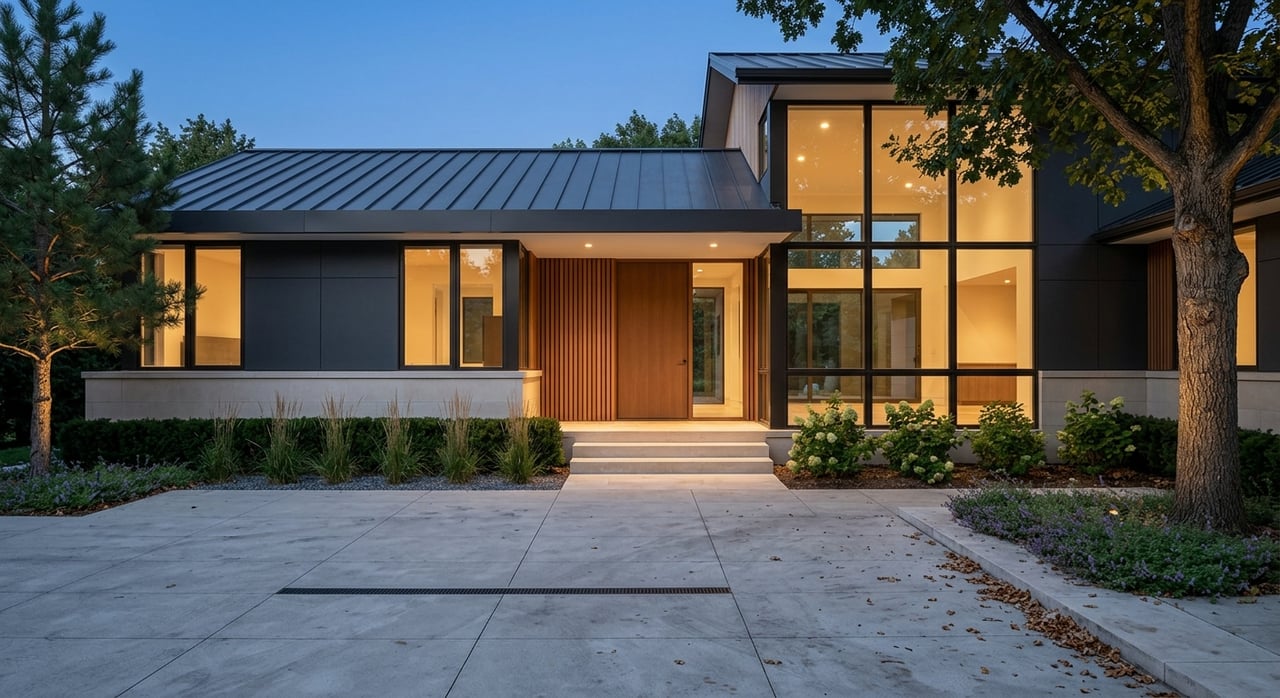
Greenwood Village vs Cherry Hills: Which Fits Your Move?
July 9, 2026
July 9, 2026
Trying to choose between Greenwood Village and Cherry Hills Village for your next move? If you are looking at both, you are likely deciding between two well-known south metro communities that sit in a similar luxury tier but live very differently day to day. The right fit often comes down to how you want to spend your time, how much space you want around you, and how important commute access is in your routine. Let’s break it down.
Greenwood Village and Cherry Hills Village are close in geography, but they offer two distinct living environments. Greenwood Village covers 8.3 square miles and has 15,691 residents, with a daytime population of about 38,500. The city describes itself as a blend of urban and residential areas, with part of the Denver Tech Center, Greenwood Plaza, and a range of retail and restaurant uses.
Cherry Hills Village is smaller at 6.5 square miles with 6,442 residents. Its public plans describe it as predominantly residential, with a strong focus on preserving a low-density, semi-rural pattern. That difference shapes how each place feels when you live there.
If you want a more connected, active setting, Greenwood Village tends to offer that experience. Its comprehensive plan preserves single-family character while also maintaining a balance between single-family and multi-family residential uses. In practical terms, that means you can find luxury residential areas with more variety nearby.
Cherry Hills Village takes a more protective approach to land use. Its master plan centers on preserving a low-density residential environment and discouraging expansion of commercial land uses. If your goal is a quieter, more consistently residential setting, that may be a better match.
One of the biggest differences between these two communities is housing range. Greenwood Village has a broader set of residential districts, from larger estate settings to smaller-lot residential areas and planned unit developments. The city code includes districts such as 2.5-acre lots, 1-acre lots, 22,500-square-foot lots, and PUD standards at 30,000 square feet.
That range gives Greenwood Village more internal variety. If you want a luxury neighborhood but do not necessarily need a large estate parcel, you may find more options that fit your lifestyle and maintenance preferences.
Cherry Hills Village is more consistently focused on large-lot single-family homes. Its master plan defines rural-density residential as 2.5 acres or larger, low-density residential as 1 acre or larger, and medium-density residential as 16,000 square feet or larger. The zoning pattern supports a more estate-oriented feel across the community.
For many buyers, this decision is less about price point and more about rhythm of life. Greenwood Village may fit you better if you want luxury living with easier access to offices, dining, services, and transportation. Cherry Hills Village may fit you better if you want more separation from commercial activity and a setting that feels more private and residential.
Neither choice is universally better. The better option is the one that lines up with how you want to live every day.
Greenwood Village has a strong edge for buyers who care about commute efficiency, especially if your work or routine connects to the Denver Tech Center. The city says it is home to part of the DTC and has direct access to I-25, adjacency to I-225, and three light rail stations within city limits: Arapahoe Station at Village Center, Orchard Station, and Dayton Street Station.
The city also notes rail access from Denver International Airport and Centennial Airport about 10 minutes east. If you travel often or want multiple transportation options, that convenience can be a major advantage.
Greenwood Village also brings more built-in amenities within the city itself. It maintains more than 440 acres of parks, trails, and open spaces, along with about 40 miles of trails. The city also highlights destination spaces such as Westlands Park, Silo Park, and the Curtis Center for the Arts.
That mix can appeal to buyers who want outdoor access without giving up proximity to workplaces, retail, and restaurants. You may find that it supports a more live-work-play routine.
Cherry Hills Village emphasizes a different kind of daily experience. The city highlights parks, trails, open space, the High Line Canal, and Quincy Farm in its public materials. Its planning documents continue to reinforce a predominantly residential future rather than expanded commercial growth.
If you picture your ideal home life as quieter streets, larger lots, and more open surroundings, Cherry Hills Village may feel more aligned with that goal. Buyers looking for a more estate-residential environment often focus here for that reason.
It is also helpful to think about how each community is structured over time. According to the Census Bureau, Cherry Hills Village has a 97.0% owner-occupied housing unit rate, compared with 64.1% in Greenwood Village. That does not define value by itself, but it does suggest Cherry Hills Village has a more uniformly owner-occupied housing profile.
Greenwood Village, by contrast, reflects a more mixed housing pattern. For some buyers, that broader mix is a positive because it can support a wider resale audience and more housing options. For others, the stronger land-use preservation in Cherry Hills Village may be more appealing.
If school assignment is part of your move, verify boundaries by address before you buy. Greenwood Village is served by both Cherry Creek School District and Littleton Public Schools, with the split at Holly Street. Greenwood Village notes that assignment should be checked by address, and Cherry Creek Schools uses an address-based locator because boundaries can change.
The same address-level verification approach is smart in Cherry Hills Village as well. If this factor matters in your home search, make it part of your early due diligence.
If you are still deciding, it helps to reduce the choice to a few core priorities. Think less about reputation and more about how the location supports your actual routine.
Here is a simple way to frame it:
On paper, these two communities can look similar because both are established luxury south metro options. In person, they often feel very different. Street patterns, lot sizes, nearby activity, and commute routes can all shape whether a home feels like the right fit.
That is why a neighborhood-level approach matters. When you compare Greenwood Village and Cherry Hills Village home by home, the best decision usually becomes much clearer.
If you are weighing both communities, working with someone who understands the nuances can save you time and help you narrow the search with confidence. Debbie Niedergerke offers direct, senior-level guidance for buyers and sellers across Denver’s premium neighborhoods, including Greenwood Village and Cherry Hills Village.
Stay up to date on the latest real estate trends.
Get assistance in determining current property value, crafting a competitive offer, writing and negotiating a contract, and much more. Contact Debbie today to discuss all your real estate needs.