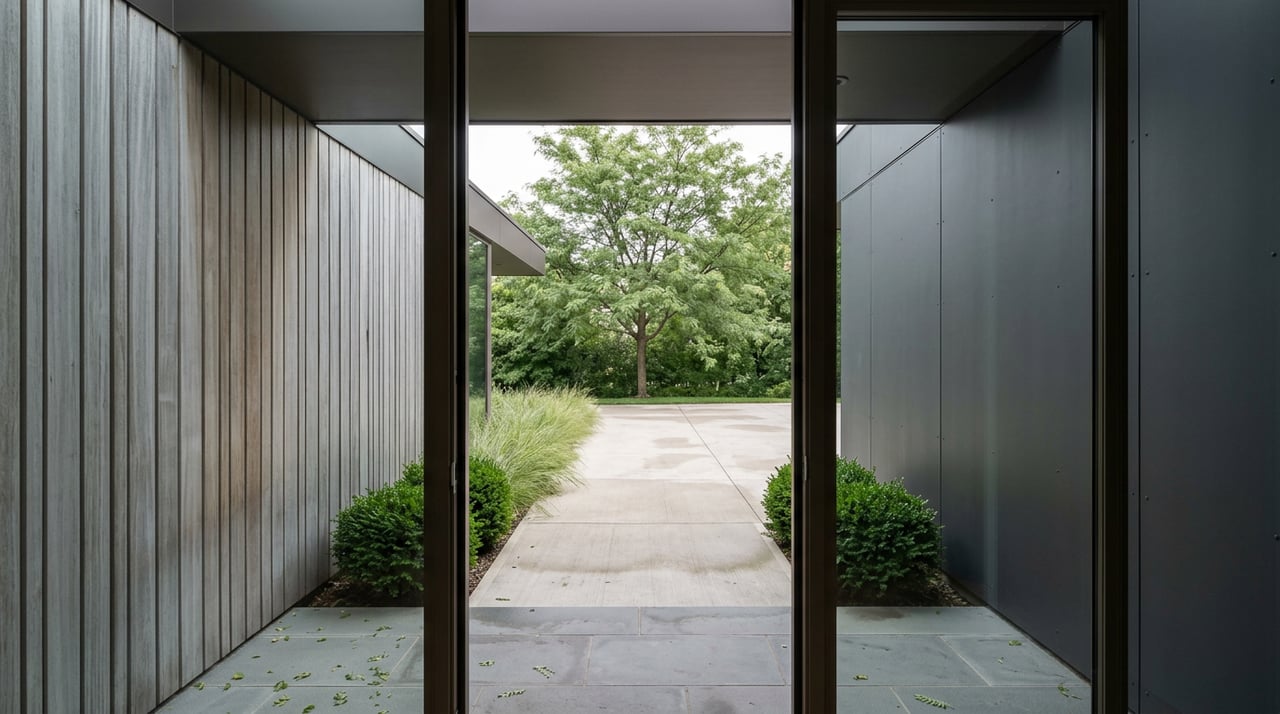
Denver Tech Center New Construction Homes Taking Shape
September 3, 2026
September 3, 2026
Drive the loop around Belleview Avenue and Orchard Road on any given weekday and you will pass three signs that seem to contradict each other. A demolition notice on a six-story office tower. A "now leasing" banner on a building that spent twenty years as a corporate headquarters. And, a few blocks south, a construction fence around thirteen acres where nothing has been built in a generation.
All three are real estate near the Denver Tech Center. None of them are the same market.
The easy read on DTC right now is that office vacancy, sitting around 20.4 percent at the end of 2025, means the corridor is hollowing out. That read is backwards. The empty space isn't a symptom of decline. It's the raw material three different builders are using to make three unrelated bets on what living in DTC can mean, at three price points that have almost nothing in common. If you're comparing a home near the tech center against a house in Greenwood Village proper, Centennial, or Cherry Hills Village, you need to know which of those three bets you're actually looking at, because the word "DTC" on a listing no longer describes one neighborhood.
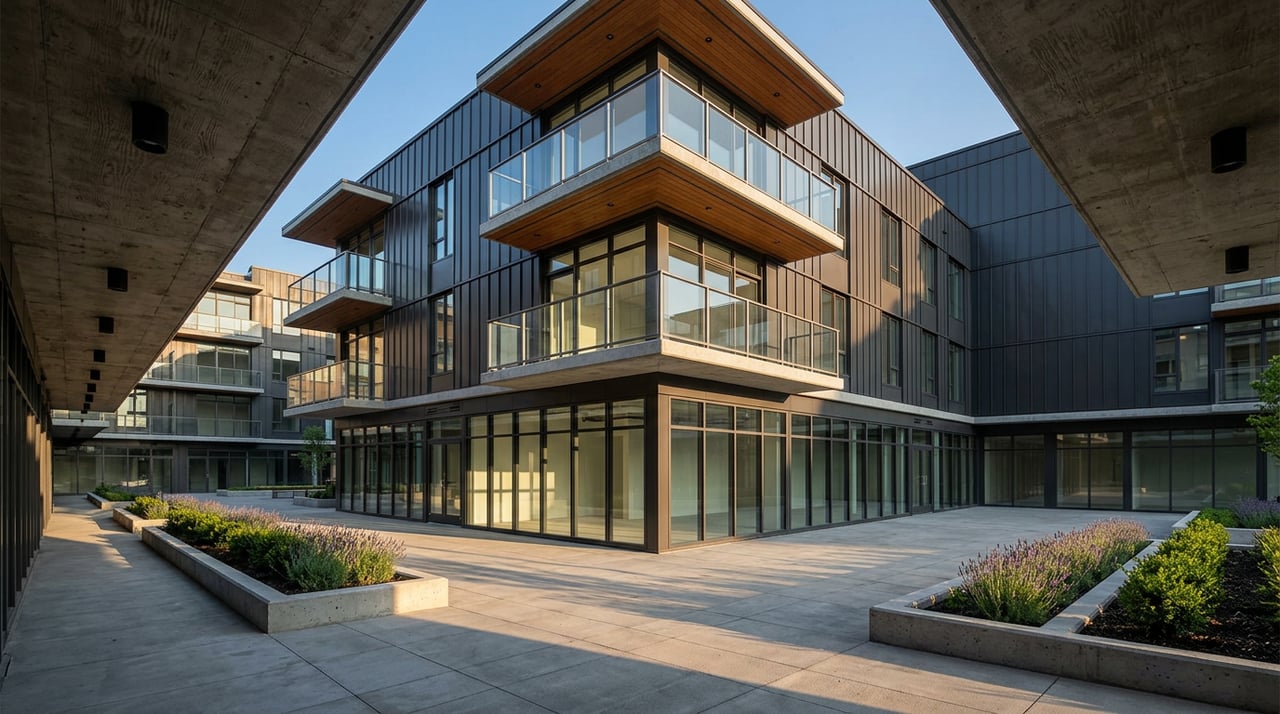
Start with the least glamorous of the three, because it's the one that's finished. At 4340 S. Monaco Street, a four-story office building that once housed Invesco's regional headquarters sat vacant for years. Shea Properties converted it into Lofts on Monaco, 143 apartments reserved for tenants earning between 30 and 70 percent of area median income, with construction completing in July 2026. It's one of the first office-to-residential conversions finished in Denver since the pandemic, and Shea says it's the area's first developer-led conversion built specifically as affordable housing.
One of the first residents, a special education teacher who relocated from New Orleans for a job in north Denver, described finding an apartment there within weeks of landing the position, and pays about $950 a month for a three-bedroom unit. Shea Properties executive vice president Peter Culshaw called the conversion "a very complex project" and "a very risky endeavor," a reminder that turning decades-old office floor plates into livable apartments is neither cheap nor simple, even when the economics eventually work.
This matters to a buyer looking at DTC not because it competes with anything you'd purchase, but because it's proof of concept. If a vacant office building can pencil out as income-restricted housing, the same vacancy is also pencilling out as two very different products a short drive away.
A different logic is playing out just across the highway. At 7601 E. Technology Way, a six-story office tower built in 1997 still holds a handful of tenants, including a Denver office used by Zoom. Dallas-based Trammell Crow Residential filed plans with the city on February 9, 2026, to tear the building down and replace it with two five-story, Alexan-branded apartment buildings holding roughly 660 units combined. The parcel sold to Morning Calm Management in January 2026, backed by a $90 million loan from Athene, and unlike Shea's income-restricted units on Monaco Street, nothing about this project is income-capped. It's conventional market-rate rental, built on the same premise as the affordable conversion a few blocks away: an office tower that can't hold tenants at any price is worth more today as housing.
This is the middle tier the other two threads don't touch. It isn't reserved for a specific income band, and it isn't for sale. If your search includes new rental construction near the tech center rather than a purchase, this is the product you're likely to end up touring, not the gated single-family homes and not the income-restricted units on Monaco Street.
The one that actually matters if you're shopping for a home to buy is the one that broke ground most recently, and it looks nothing like the other two.
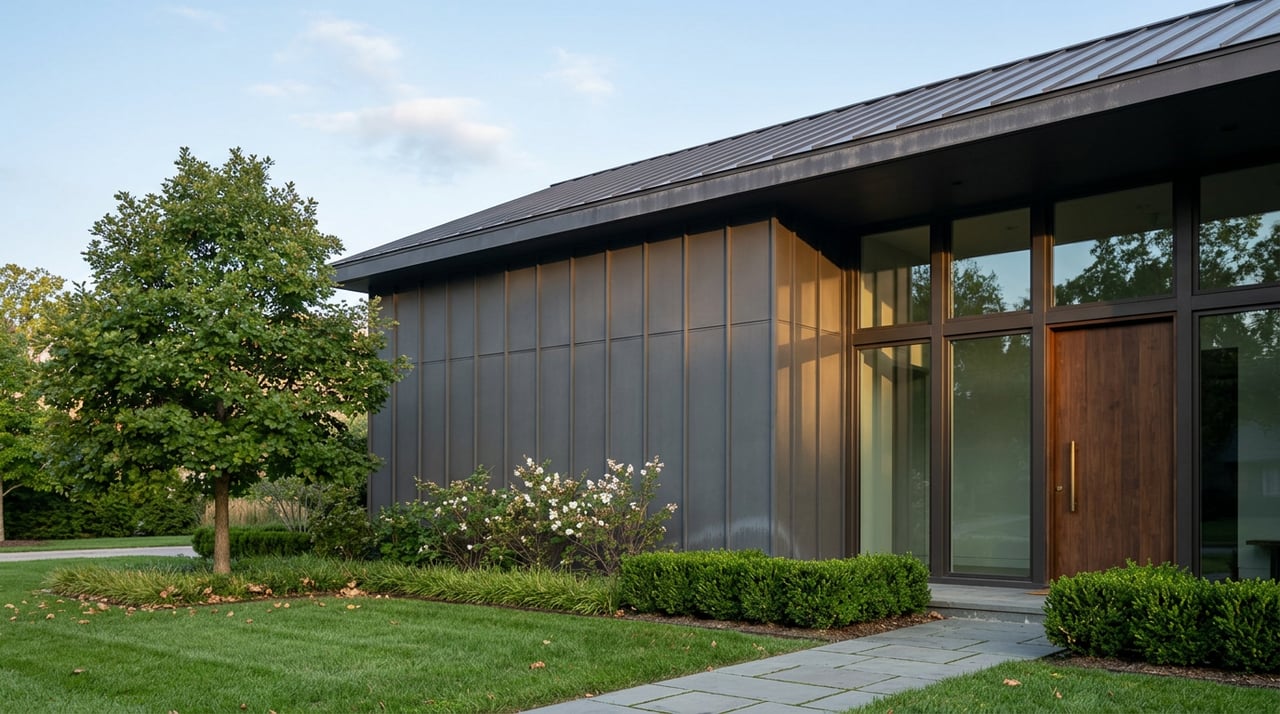
Century Communities began site work in May 2026 and held a formal groundbreaking on June 4, 2026, for The Village at Landmark, a gated enclave of 90 detached single-family homes on 13 acres directly south of The Landmark entertainment district. Five floor plans from Godden Sudik Architects will run roughly 3,280 to 4,550 square feet, with private elevators, rooftop living spaces, three-bay garages, and basements. Pricing is expected to run $1.7 million to $3 million. Model homes are slated to start construction later in 2026, but actual home sales aren't anticipated to open until spring 2027.
"Opportunities like this simply don't come along often in Greenwood Village," Century Communities regional president Todd Baker said at the groundbreaking.
That's not a marketing line you should discount. New detached single-family construction hasn't happened at this scale anywhere along the south I-25 corridor in roughly a decade, because there's almost no land left to build it on. The site sits close enough to walk to Landmark Theatres, Comedy Works, JING, and Upstairs Circus, and it's about half a mile from Club Greenwood's 153,000-square-foot athletic facility. Nothing else coming out of DTC's vacancy wave looks like this, and nothing filling the pipeline behind it does either. Once these 90 lots sell, this particular version of DTC housing is gone.
Here's where the three threads collide into a single confusing number. Check a handful of market-tracking sites for Greenwood Village, which contains most of DTC, and you'll find the reported median sale price bouncing anywhere from the mid-$1.4 millions to the mid-$1.8 millions depending on which site and which week you check. Days on market swings just as wildly, from under four weeks on some trackers to well past two months on others.
That spread isn't evidence of an unstable market. It's evidence that these medians are averaging three fundamentally different products that happen to share a zip code: income-restricted apartments renting near $950 a month, market-rate towers built around a corporate tenant base, and single-family estates that will open at $1.7 million and won't hit the resale market for years. A median built from that mix tells you almost nothing about what your money buys at any one address. The block, not the zip code, is the unit of comparison that matters here.
If you're comparing DTC-adjacent living to an established address in Greenwood Village, Centennial, or Cherry Hills Village, three things follow directly from the research above.
First, don't wait on The Village at Landmark to make your decision. Sales won't open until spring 2027, pricing is set by the builder rather than negotiated, and by the time reservations begin you'll be competing with every other buyer who read the same press release. If a new build is genuinely your preference, get on the interest list early, but don't let it freeze a decision you could make on today's resale inventory.
Second, treat the office vacancy rate as a leading indicator of future amenity buildout, not a warning sign about your home's value. The same vacancy that's producing headlines about a struggling office market is directly funding more retail, more restaurants, and more foot traffic in the immediate area. Belleview Station, the corridor's older transit-oriented development, has run this exact playbook for over a decade: its office space stays close to fully leased with tenants like Western Union and Newmont Mining, while its residential and retail buildout keeps expanding around it.
Third, when you're handed a "DTC median," ask which product it's built from. A townhome near the light rail, a rental conversion, and a gated single-family estate are not interchangeable comparables even when a spreadsheet lists them under the same submarket.
Will DTC's office vacancy hurt resale value on a home I buy nearby? The evidence points the other direction. Vacant office space is what's funding the residential and retail buildout that's making the corridor more livable, not less. The buildings most at risk are the office towers themselves, not the homes near them.
Should I wait for Village at Landmark to open instead of buying now? Only if a new-construction gated community at $1.7 million to $3 million is specifically what you want. Sales don't start until spring 2027, and builder pricing on a scarce product like this rarely comes with room to negotiate.
Why do different sites report such different median prices for Greenwood Village? Because they're blending single-family estates, market-rate rentals, and income-restricted apartments into one number. The median is a poor tool for this specific submarket. A block-by-block comparison of actual closed sales is the only version worth trusting.
DTC isn't becoming one neighborhood. It's becoming three, stacked on top of the same office vacancy, and the single-family version is the one that won't repeat. If you're trying to figure out which of these three markets actually fits what you're looking for, and what a resale purchase near any of them looks like right now, Debbie Niedergerke can walk you through the current inventory and what it's really worth. Work with Debbie. Let's connect about your next move.
Stay up to date on the latest real estate trends.
Get assistance in determining current property value, crafting a competitive offer, writing and negotiating a contract, and much more. Contact Debbie today to discuss all your real estate needs.